Kabbalah · Consciousness · 2 min read
What hides the light also protects it.
Klipot in Kabbalah: our defences, and why it hurts when they crack, and also illuminates.
Idan YakovTranslated from Hebrew
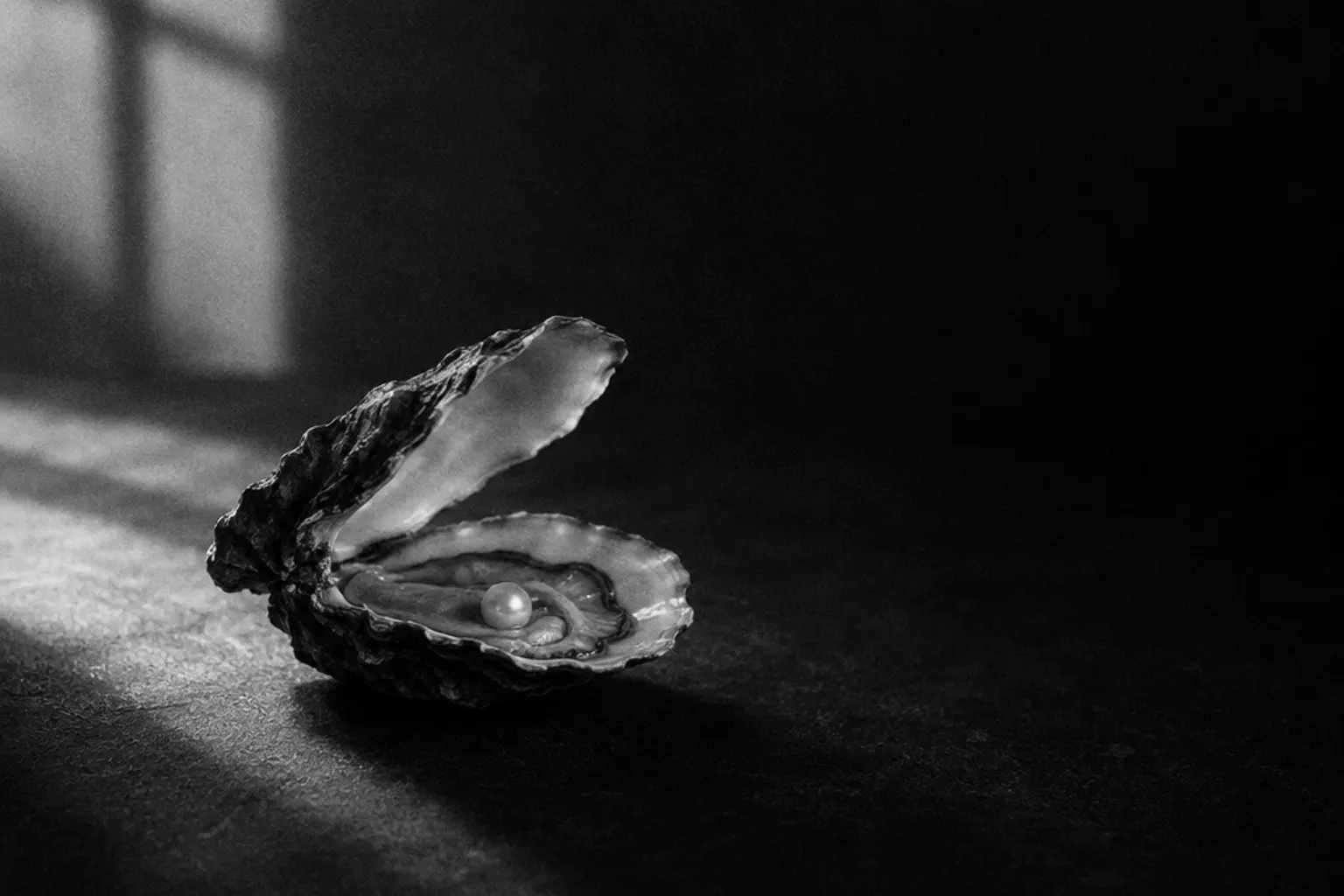
Pain is sometimes a shell cracking.
The idea
Kabbalah has a concept called Klipot, “shells”: forces that wrap the light and hide it, like the peel of a fruit or an oyster around a pearl. The shell both protects the light and prevents it from coming out.
In the language of life, the Klipot are the defences we built: cynicism, control, “I don't care”, the need to be right. They helped us once. Today they hide.
And in this reading, some of the pain we experience is the moment a shell cracks. It hurts, because the defence breaks. But it's also the moment something real can come out.
How it shows up
Criticism that gets in exactly where it's most sensitive. A breakup that dismantles an image. A failure that forces you to admit what you hid.
An illustration (not a real client)
Someone who was always “the strong one in the family” gets a hard response from his son: “You're never really here.” At first he defends himself. Later, alone, he understands that his strength was also a wall. The pain of that sentence opened a conversation that wasn't possible before.
The paradox is that what is hardest to hear is sometimes what most needs to be heard. The defence feels like security, but it is also what prevents closeness.
The shift is asking, when something hurts: which defence cracked here? And what was it hiding?
In business
- A client who leaves with harsh feedback that, in hindsight, was exactly what you needed to hear.
- A launch that fails and exposes a fear hidden under “I'm just busy”.
Practice
One question
Which of my defences helped me once, and today mostly hides?
One action
Choose one defence (cynicism, control, people-pleasing) and notice this week one moment when it appears. Just see it, without changing.
Go deeper: Learning Kabbalah for beginners: Kabbalah in everyday life
Read next
Consciousness · 2 min read
Pain is inevitable. Suffering is already a story.
The event hurts. Our interpretation of it is what turns a painful moment into a loop of weeks.
Consciousness · 3 min read
Why do I deserve all this good?
We ask “why me?” only when it hurts. What happens when you ask it when things are good too.